

Launching a startup requires capital, and choosing the right funding path can determine whether your venture thrives or struggles. This guide explores six primary ways to finance a startup—ranging from self-funding to venture capital—along with step-by-step guidance, checklists, and examples.
Whether you’re bootstrapping from savings, pitching to angels, exploring crowdfunding, or applying for government grants, this article breaks down what works best at each stage.
👉 Related: Online & Passive Income Ideas
Key Takeaways
- Bootstrapping first: ~77% of startups begin with personal funds (Fundera). Self-funding keeps control but limits growth.
- Funding mix matters: Common options include bootstrapping, angel investors, venture capital, crowdfunding, loans, and grants—each with unique pros and cons.
- Match to stage: Early ideas rely on self-funding/angels; growth-stage startups may target VC or business loans. Grants/crowdfunding suit niche projects.
- Qualify smartly: Solid business plan, traction, and credit improve chances. Tailor approach for investors vs lenders vs grant committees.
- Follow a structured process: From investor pitches to loan applications, step-by-step preparation boosts success odds.
1. Bootstrapping (Self-Funding Your Startup)
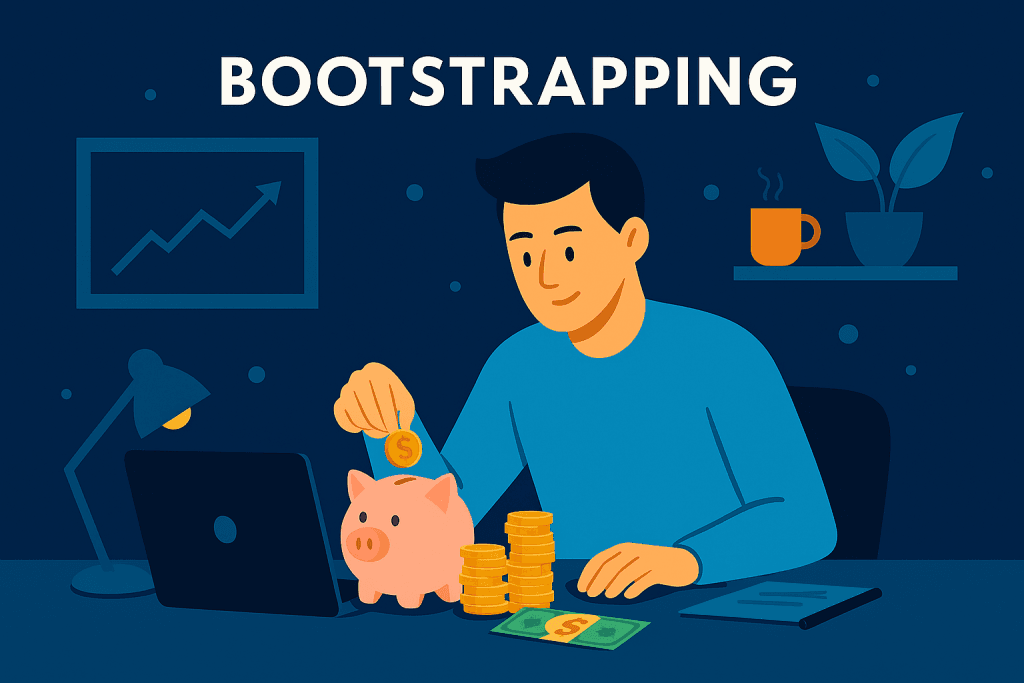
Bootstrapping means financing your startup with your own savings or reinvested revenue. Many entrepreneurs, including Mailchimp, started this way.
Pros: Full ownership, no debt.
Cons: Limited funds, slower growth, higher personal risk.
Steps to Bootstrap:
- Allocate personal savings with a lean budget.
- Reinvest early revenue back into growth.
- Use personal credit/assets carefully.
- Consider friends & family support (with clear terms).
- Build an MVP and validate cheaply using free/low-cost tools.
Checklist:
- Personal savings allocated
- Lean business plan
- Revenue strategy for cash flow
- Backup plan for personal finances
2. Angel Investors (Early-Stage Investors)
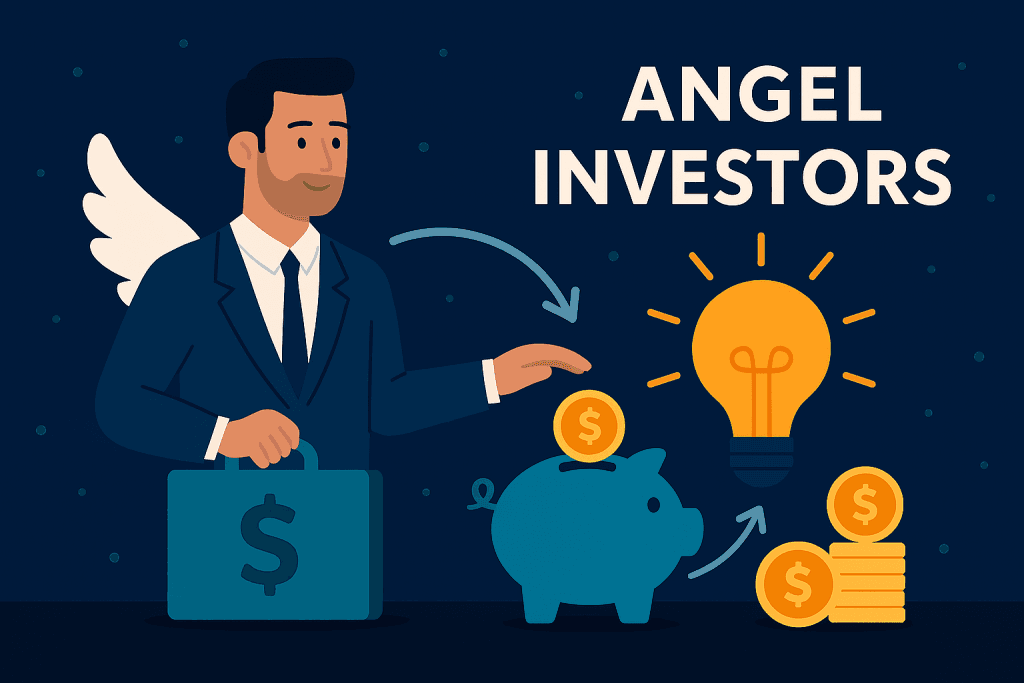
Angel investors are wealthy individuals funding startups for equity. They typically invest $10K–$250K and bring mentorship and networks. Platforms like AngelList or accelerators such as Y Combinator help connect with angels.
Steps to Attract Angels:
- Have a prototype and traction.
- Network through incubators, events, and LinkedIn.
- Prepare a compelling pitch deck (10–15 slides).
- Negotiate equity and use SAFE/convertible notes.
- Maintain transparent communication after funding.
Checklist:
- Pitch deck ready
- Prototype/demo available
- Legal docs & valuation clarity
- Target investor list
3. Venture Capital (VC Funding)
VC firms provide larger investments ($1M+ per round) in exchange for significant equity and often board seats. Only ~0.05% of startups secure VC (Fundera).
Pros: Access to big capital, networks, prestige.
Cons: Equity dilution, loss of control, growth pressure.
Steps to Secure VC:
- Achieve product-market fit & traction.
- Target VCs that match your industry/stage.
- Get warm introductions or join accelerators (YC, Techstars).
- Polish pitch deck & financials with growth projections.
- Negotiate term sheets carefully (valuation, liquidation preferences, board rights).
4. Crowdfunding (Online & Community Funding)
Crowdfunding collects small contributions from many backers. Models include reward-based (Kickstarter), equity (SeedInvest, Crowdcube), and debt/donation (Kiva).
Pros: Market validation + funding, no equity (for rewards).
Cons: High marketing effort, avg success rate ~22% (Coinlaw).
Steps to Launch:
- Pick the right platform & model.
- Set realistic funding goal & timeline.
- Create engaging campaign page with video.
- Promote heavily before & during launch.
- Engage backers & deliver rewards.
Checklist:
- Campaign video
- Clear story + visuals
- Reward tiers or equity terms
- Marketing plan
5. Small Business Loans (Debt Financing)

Loans let you retain ownership but require repayment with interest. Options include banks, SBA loans (avg $700K), fintech lenders (OnDeck, Kabbage), and microloans (Kiva, SBA Microloan program).
Pros: Keep equity, tax-deductible interest.
Cons: Repayment risk, qualification challenges.
Steps to Apply:
- Decide funding need & loan type.
- Prepare business plan, financials, and credit check.
- Compare banks, credit unions, online lenders.
- Submit a complete application.
- Close loan & review terms carefully.
Checklist:
- Credit scores checked
- Financial docs ready
- Collateral identified
- Loan calculators tested
6. Grants & Government Programs
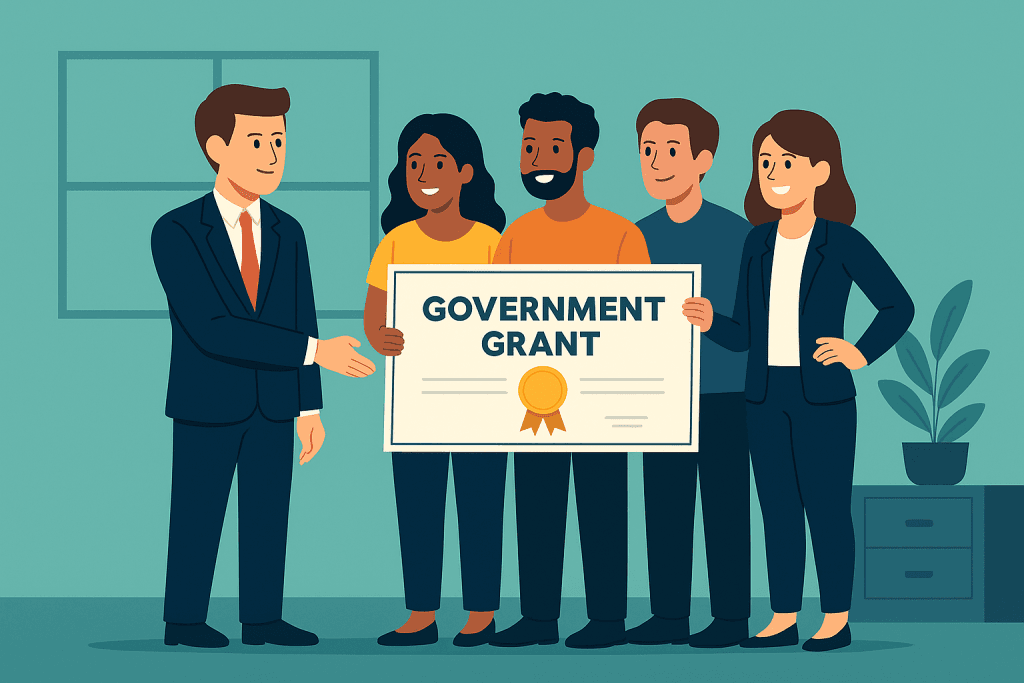
Grants are non-repayable funds from governments, corporates, or foundations. Examples: US SBIR/STTR ($4.3B in 2022), Horizon Europe, Google for Startups.
Pros: Non-dilutive, adds credibility.
Cons: Competitive, time-intensive applications, strict reporting.
Steps to Apply:
- Research grants by industry & eligibility.
- Align project goals with grant objectives.
- Prepare a strong proposal (budget, impact, deliverables).
- Gather supporting docs & letters.
- Submit on time & follow reporting requirements.
Checklist:
- Grants calendar made
- Proposal drafted
- Support letters collected
- Compliance double-checked
👉 Related: Startup & Founder Resources
Comparison Table: Funding Options
| Option | Equity? | Repayment? | Typical Amount | Examples |
| Bootstrapping | No | No | <$10K typical | Personal savings, revenue |
| Angel Investors | Yes | No | $25K–$1M | AngelList, local groups |
| Venture Capital | Yes | No | $1M+ rounds | Sequoia, a16z, YC |
| Crowdfunding | Maybe | No | $5K–$100K+ | Kickstarter, SeedInvest |
| Business Loans | No | Yes | $10K–$700K+ | SBA, banks, fintech |
| Grants | No | No | $5K–$1M+ | SBIR, Horizon EU |
👉 Related: SaaS & Software Reviews
Choosing the Best Funding Option
- Idea/Prototype Stage: Bootstrapping, Angels, Grants.
- Growth Stage: VC, Loans, Equity Crowdfunding.
- Product Launch: Crowdfunding + Pre-orders.
- Special Projects: Grants & Competitions.
Always weigh the cost of capital (equity vs debt vs time). Many successful startups mix funding types over time.
FAQ
Q1: What is the best funding option for startups?
Depends on stage—bootstrapping early, VC for scaling, crowdfunding for product launches.
Q2: How do I qualify for loans?
Good credit, strong business plan, and proof of revenue/traction.
Q3: How does crowdfunding work?
Create a campaign, set goal, and engage backers with rewards or equity offers.
Q4: Angel vs VC?
Angels = personal money, smaller, flexible. VCs = institutional, bigger, higher expectations.
Q5: Can I combine funding sources?
Yes, many startups mix bootstrapping, crowdfunding, grants, and investor rounds.
Q6: Do I repay investor money like a loan?
No, investors take equity; loans require repayment.
Q7: How can I find grants?
Check Grants.gov (US), Horizon Europe, local agencies, foundations, universities.
External Link:
- Bootstrapping → Gallup / Fundera https://fundera.com/resources/small-business-statistics
- Angel Investing → AngelList: https://angel.co
- Venture Capital → Crunchbase: https://www.crunchbase.com‘
For More Information, Reed Now:
“The Lean Startup” by Eric Ries
“Angel: How to Invest in Technology Startups” by Jason Calacanis
(Angel investing guide)
“Venture Deals: Be Smarter Than Your Lawyer and Venture Capitalist” by Brad Feld
(VC negotiation & funding deep dive)
“Crowdfunding Basics In 30 Minutes” by Michael J. Epstein
(Step-by-step guide to Kickstarter/Indiegogo)
“The Small Business Funding Guide” by Tom Corson-Knowles
(Loans + Grants insights for entrepreneurs)
Author Bio
By [Ethan.brooks, Startup Advisor & Financial Writer
Last Updated: September 2, 2025


